Hôm nay,  

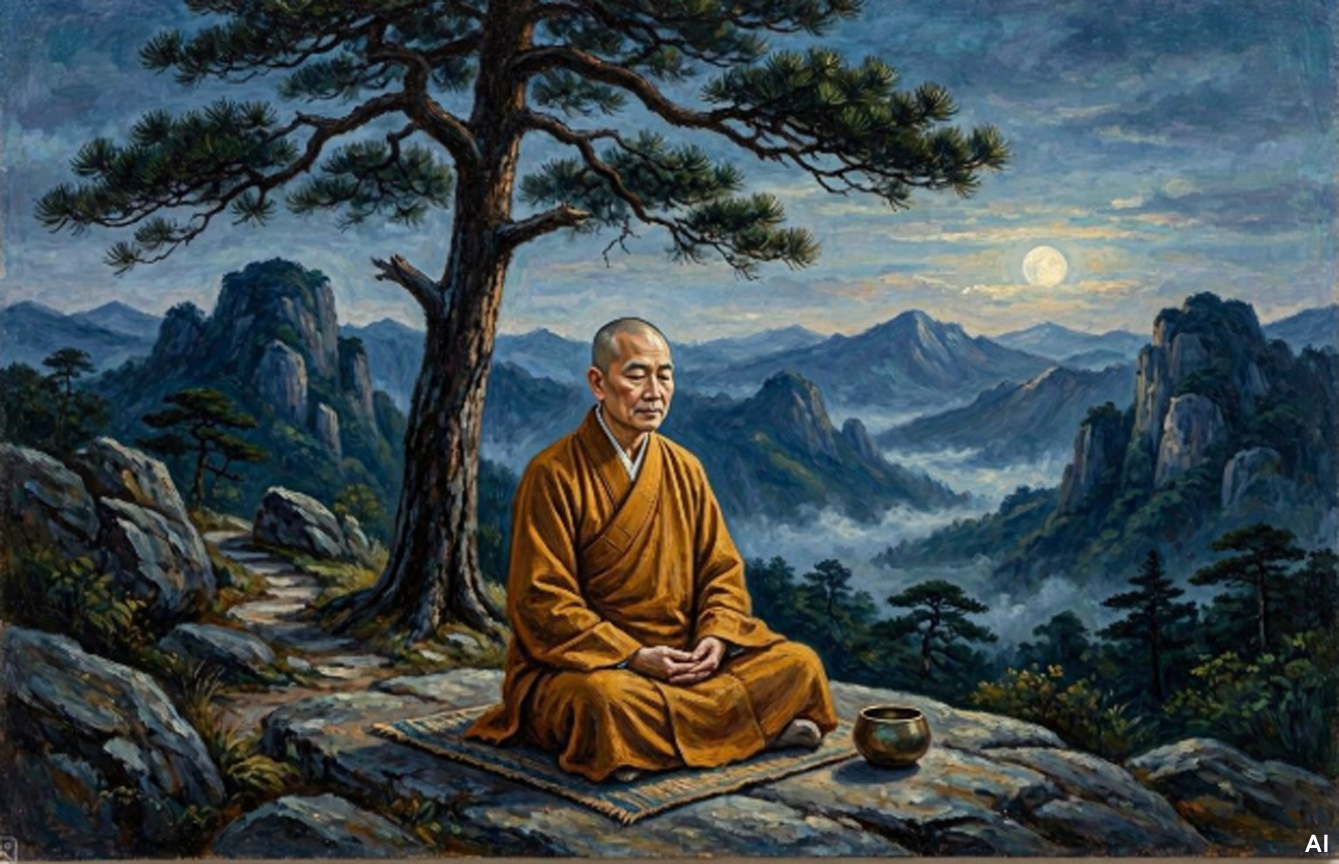
Lời Dạy Thiền Của Vua Trần Nhân Tông / Teachings on Zen by King Trần Nhân Tông

06/07/202609:19:00(Xem: 1306)
blank
  

Thơ Nguyên Giác

LỜI DẠY THIỀN CỦA VUA TRẦN NHÂN TÔNG

Khô cạn tham ái, tâm như sư núi,
buông hết xa hoa, thân giữa phố bụi
chẳng khởi thị phi, nghe tịch lặng hát
thấy nguồn tâm rồi, chẳng còn pháp khác

thấy nghe tỉnh thức, chiếu sáng như gương
tham sân tự dứt, vọng tưởng tự dừng
thấy rõ không ta, thấy rõ không người
muôn nghiệp tự vắng, giới hạnh sáng ngời

rau trái đơn sơ, đừng lìa tánh giác
ngộ tâm như thị, tâm sáng là Phật
Tịnh Độ là tâm: phương Tây không xa
vô vi, bất động: tánh sáng Di Đà

không quên ơn trọng, vua, thầy, cha mẹ
vun bồi công đức, vuông tròn định tuệ
thổi sáo không lỗ, khởi từ bi tâm
ta người không khác, trân trọng thế gian

cây bách là tâm, mê lầm tan biến
tiếng trúc là tâm, mây tan, trăng hiện
thực tướng như thị: không Bắc, không Nam
tịch lặng trong trẻo, rỗng không là tâm

đói ăn, mệt ngủ, vui đạo, tùy duyên
tỉnh thức, vắng lặng, hỷ lạc, an nhiên
trong tâm có Phật, vô trụ vô tâm
chẳng hỏi chi thiền, muôn cảnh thế gian

GHI CHÚ:
Bài thơ tiếng Việt này là bản cô đọng, sát nghĩa và giữ hồn thơ từ bài phú “Cư Trần Lạc Đạo” của Vua Trần Nhân Tông (1258–1308). Tuy nhiên, bản dịch tiếng Anh kèm theo sẽ làm cho ý chỉ Thiền dễ hiểu, không tập trung vào giữ hồn thơ.

.... o ....

Teachings on Zen by King Trần Nhân Tông

Quench your cravings, keep your mind like that of a mountain monk, and cast aside all luxuries—even while living in a dusty city.
Let go of notions of right and wrong, listen to the song of stillness, and see where the mind arises; then no other teaching is needed.

See and hear with full awareness, reflecting like a mirror; then greed and hatred naturally subside, and delusive thoughts inevitably vanish.


Once you realize that there is neither self nor other, karmic forces naturally dissipate, allowing the radiance of moral conduct to shine forth.

Eat fruits and vegetables and live simply; do not depart from the nature of awareness.
Live with a mind of suchness, and you will perceive that the luminous mind is the Buddha.
The Pure Land is the pure mind; the West is not far away.
That unconditioned and still mind is the radiant nature of Amitabha.

Do not forget the profound debt of gratitude owed to the king, teachers, and parents. Cultivate merit to develop concentration and wisdom to their fullest extent.
Playing a holeless flute, you will naturally hear a heart of compassion emerge, perceive no distinction between yourself and others, and come to cherish the world.

When the cypress tree is perceived as the mind, delusion vanishes. When the sound of bamboo is heard as the mind, the clouds disperse, and the moon appears.
When the true nature of reality is perceived as suchness, there is neither North nor South; the mind remains serene, clear, and void.

Eat when you are hungry; sleep when exhausted; find joy in the Way, live in harmony with your circumstances, and abide in constant mindfulness—serene, joyful, and at peace.
When the mind clings to nothing, the Buddha appears; amid the myriad worldly scenes, there is no need to seek Zen.

NOTE:
This Vietnamese poem is a concise and faithful adaptation that preserves the poetic spirit of the prose "Cư Trần Lạc Đạo" by King Trần Nhân Tông (1258–1308). However, the accompanying English translation prioritizes conveying the Zen message in an accessible manner over maintaining the original poetic essence.


25/07/202318:06:00
Phòng hộ các căn không có nghĩa là đóng bít các giác quan không cho tiếp xúc với các trần cảnh. Điều này là không thể. Chỉ chánh niệm tỉnh giác, phòng hộ các căn không để cho tâm rong ruổi tìm cầu rồi dẫn đến khổ đau..../...Protecting the senses does not mean blocking the senses from contact with objects. Such a thing is not possible. Just keep your mind in mindfulness and clear comprehension, guarding the senses, and not letting the mind wander and search (a mind that wanders and searches will lead to suffering).
22/07/202320:27:00
Có nhiều cách thức để chúng ta tiếp cận với kinh điển. Chúng ta đọc kinh như một tác phẩm văn học để tìm ra những biểu hiện thẩm mỹ của nội dung tư tưởng, hay đọc kinh để hiểu những phạm trù triết học, những tư tưởng ẩn áo mà kinh hàm chứa, v.v… There are many ways for us to approach the Scriptures. We can read the Scriptures as a literary work to find out the aesthetic expressions of the ideological content, or we can read the Scriptures to understand the philosophical categories or the hidden thoughts that the sutras contain, etc.
20/07/202321:09:00
Almost fifty years ago, my teacher gave me a Zen verse to think about when I woke up in the morning. When I first wake up from sleep, I pray that all sentient beings have wisdom, awareness, and a clear vision of the ten directions...../..... Bài thiền kệ quán chiếu thức dậy vào buổi sáng, tôi đã được thầy tôi trao cách đây gần năm mươi năm: Ngủ nghỉ mới thức dậy / xin nguyện cho chúng sanh / có trí giác hoàn toàn / nhìn rõ khắp mười phương.
18/07/202309:07:00
People who read Kim Dung's swordplay novels frequently come across the phrase "Let go of the butcher's cleaver and immediately become a Buddha." Đọc tiểu thuyết kiếm hiệp của Kim Dung, người ta thường thấy câu thành ngữ “Buông đao đồ tể, lập tức thành Phật”. Đồ tể là người làm nghề giết mổ, chuyên giết mổ súc vật; trong khi đó, một trong những trọng giới của nhà Phật là giới sát. Người Phật tử đã không được phép hại mạng sống của chúng sanh, lẽ nào người sống bằng nghề giết mổ, cả đời lấy đi mạng sống của biết bao sinh vật, chỉ cần buông đao xuống là đã có thể thành Phật, lại còn thành Phật ngay lập tức?
16/07/202319:43:00
Trong cuộc sống không phải ai cũng có cuộc gặp luôn thuận lợi hay cũng không phải ai cũng gặp hoài phiền não. Phiền não tự tâm sinh ắt tự tâm diệt, vật chất chỉ bổ trợ cho cuộc sống, nó có khi chỉ giúp cho một phần giảm phiền não nhưng không cắt đứt được não phiền. ..../....In life, not everyone has always positive meetings, and not everyone always has problems. Sorrows occur on their own and will fade away on their own, whereas financial assets simply support life, sometimes only helping to diminish afflictions little but not eliminate afflictions entirely.
13/07/202321:45:00
Cuộc sống vốn luôn vận hành, chúng ta thường xuyên chịu nhiều áp lực nặng nề với bao lo toan không hồi kết của kiếp người. Chính vì vậy mà Bùi Giáng đã từng viết “Ta cứ ngỡ xuống trần chơi một chốc; Nào ngờ đâu ở mãi đến hôm nay…”.......Life is continually flowing, often burdening us with various burdens, full of human life's infinite problems. Therefore, poet Bùi Giáng once wrote, "I thought I would come down to earth to play a little bit, but I didn't expect to stay until today."
11/07/202308:14:00
Our ancestors taught that you should learn to eat first, then learn to speak, or that when you enter the house of others, you have to follow their habits. So, when you go to an unfamiliar place, take some valuable time to ask, or keep an eye to pay attention, to emulate what people do, and you will follow. As a result, acting as "the mother of the world" is not advised…../…. Ông bà mình ngày xưa dạy rồi, học ăn xong rồi mới học nói, hay là nhập gia tùy tục. Cho nên khi đi đến chỗ nào, nơi nào lạ lạ thì mình dành chút thời gian quý báu ra để hỏi han, hay tinh mắt hơn là để ý, bắt chước người ta làm kiểu gì thì mình làm theo. Chứ để một mình một kiểu, nói theo kiểu xì tin là “mẹ thiên hạ” thì không có được.
09/07/202316:38:00
Có người cho rằng “đạo nào cũng là đạo”. Câu nói này thoạt nghe qua có vẻ hợp lý và là một ý tưởng hấp dẫn. Nếu hiểu theo một cách đơn giản, trong phạm trù luân lý đạo đức là đạo nào cũng dạy con người làm lành tránh dữ, thì câu này rất hợp lý. Tuy nhiên, chúng ta cần phải suy xét và nhận định lại quan niệm đó qua lăng kính tôn giáo...../......Some say that “all religions are the same.” This statement sounds reasonable at first glance and is a compelling idea. If understood in a simple way, in the ethical category that every religion teaches people to do good and avoid evil, then this saying is very reasonable. However, we need to rethink and re-evaluate that concept through the lens of religion.
08/07/202310:16:00
Tụng Kinh niệm Phật (Tụng là đọc, niệm là nhớ) là miệng đọc tâm nhớ, tâm và miệng hợp nhất, nhất tâm đọc và nhớ lời Kinh và danh hiệu của Phật. / Reciting sutras and remembering the Buddha (Tụng: to recite, to chant, to read; niệm: to remember, to recall, to be mindful of) means that you read and memorize at the same time, that your speech and mind become one, that you are in a state of one-pointedness while reading and remembering the sutras and the Buddha's name.
06/07/202314:33:00
Historically, Buddhism has much to do with poetic language. During his lifetime, the Buddha always encouraged his disciples to use local languages to interpret and spread his teachings. The scriptures also often use rhyming forms for the sole reason of being easy to read and remember. …../…..Về mặt lịch sử, Phật giáo có nhiều tương quan với ngôn ngữ thi ca. Khi còn tại thế, Đức Phật luôn luôn khuyến khích các đệ tử dùng các ngôn ngữ địa phương để diễn dịch, truyền đạt giáo pháp của Ngài. Các bản kinh còn lại cũng hay dùng các thể văn vần, với lý do duy nhất để dể đọc dễ nhớ
NHẬN TIN QUA EMAIL
Vui lòng nhập địa chỉ email muốn nhận.