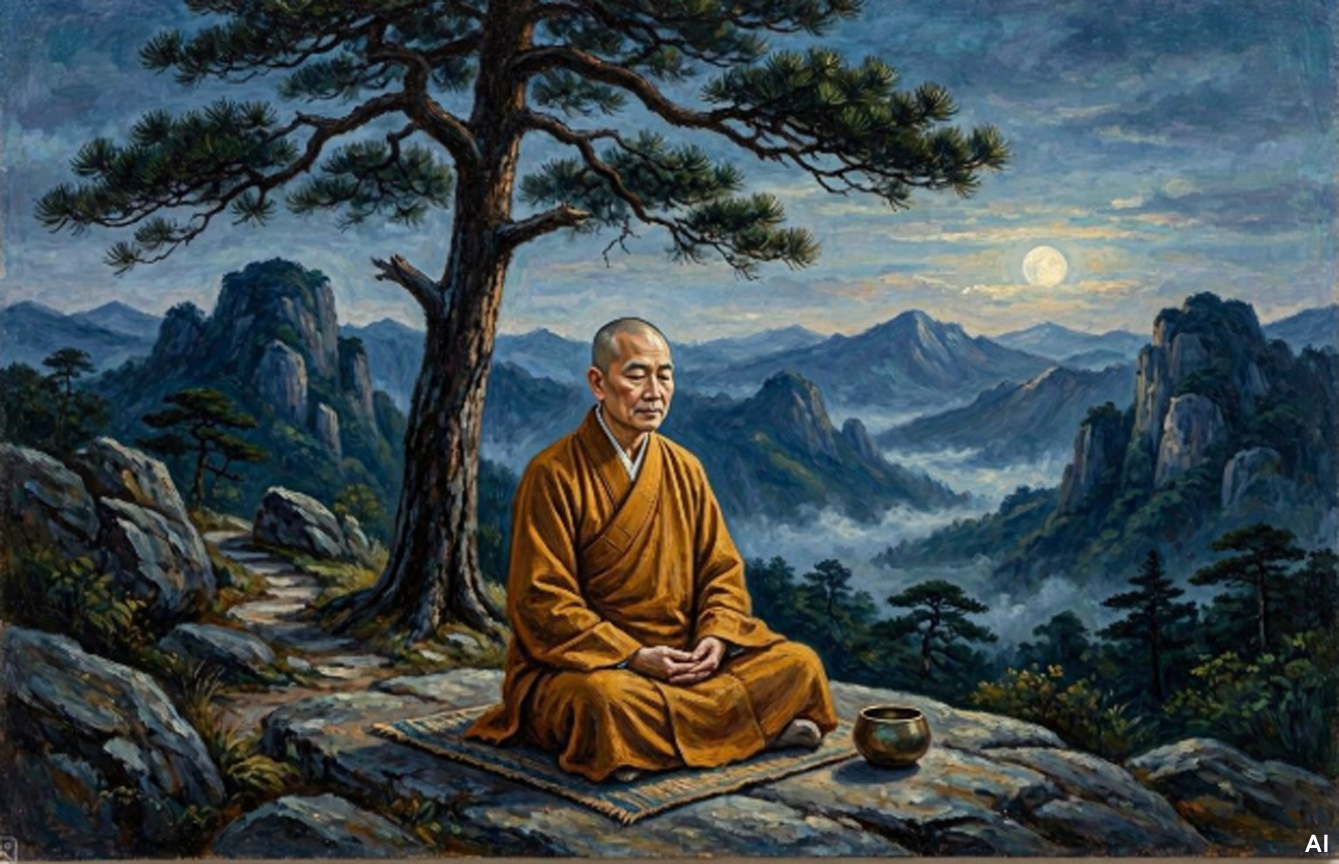
Hôm nay,  

Lời Dạy Thiền Của Vua Trần Nhân Tông / Teachings on Zen by King Trần Nhân Tông

06/07/202609:19:00(Xem: 1191)
blank
  

Thơ Nguyên Giác

LỜI DẠY THIỀN CỦA VUA TRẦN NHÂN TÔNG

Khô cạn tham ái, tâm như sư núi,
buông hết xa hoa, thân giữa phố bụi
chẳng khởi thị phi, nghe tịch lặng hát
thấy nguồn tâm rồi, chẳng còn pháp khác

thấy nghe tỉnh thức, chiếu sáng như gương
tham sân tự dứt, vọng tưởng tự dừng
thấy rõ không ta, thấy rõ không người
muôn nghiệp tự vắng, giới hạnh sáng ngời

rau trái đơn sơ, đừng lìa tánh giác
ngộ tâm như thị, tâm sáng là Phật
Tịnh Độ là tâm: phương Tây không xa
vô vi, bất động: tánh sáng Di Đà

không quên ơn trọng, vua, thầy, cha mẹ
vun bồi công đức, vuông tròn định tuệ
thổi sáo không lỗ, khởi từ bi tâm
ta người không khác, trân trọng thế gian

cây bách là tâm, mê lầm tan biến
tiếng trúc là tâm, mây tan, trăng hiện
thực tướng như thị: không Bắc, không Nam
tịch lặng trong trẻo, rỗng không là tâm

đói ăn, mệt ngủ, vui đạo, tùy duyên
tỉnh thức, vắng lặng, hỷ lạc, an nhiên
trong tâm có Phật, vô trụ vô tâm
chẳng hỏi chi thiền, muôn cảnh thế gian

GHI CHÚ:
Bài thơ tiếng Việt này là bản cô đọng, sát nghĩa và giữ hồn thơ từ bài phú “Cư Trần Lạc Đạo” của Vua Trần Nhân Tông (1258–1308). Tuy nhiên, bản dịch tiếng Anh kèm theo sẽ làm cho ý chỉ Thiền dễ hiểu, không tập trung vào giữ hồn thơ.

.... o ....

Teachings on Zen by King Trần Nhân Tông

Quench your cravings, keep your mind like that of a mountain monk, and cast aside all luxuries—even while living in a dusty city.
Let go of notions of right and wrong, listen to the song of stillness, and see where the mind arises; then no other teaching is needed.

See and hear with full awareness, reflecting like a mirror; then greed and hatred naturally subside, and delusive thoughts inevitably vanish.


Once you realize that there is neither self nor other, karmic forces naturally dissipate, allowing the radiance of moral conduct to shine forth.

Eat fruits and vegetables and live simply; do not depart from the nature of awareness.
Live with a mind of suchness, and you will perceive that the luminous mind is the Buddha.
The Pure Land is the pure mind; the West is not far away.
That unconditioned and still mind is the radiant nature of Amitabha.

Do not forget the profound debt of gratitude owed to the king, teachers, and parents. Cultivate merit to develop concentration and wisdom to their fullest extent.
Playing a holeless flute, you will naturally hear a heart of compassion emerge, perceive no distinction between yourself and others, and come to cherish the world.

When the cypress tree is perceived as the mind, delusion vanishes. When the sound of bamboo is heard as the mind, the clouds disperse, and the moon appears.
When the true nature of reality is perceived as suchness, there is neither North nor South; the mind remains serene, clear, and void.

Eat when you are hungry; sleep when exhausted; find joy in the Way, live in harmony with your circumstances, and abide in constant mindfulness—serene, joyful, and at peace.
When the mind clings to nothing, the Buddha appears; amid the myriad worldly scenes, there is no need to seek Zen.

NOTE:
This Vietnamese poem is a concise and faithful adaptation that preserves the poetic spirit of the prose "Cư Trần Lạc Đạo" by King Trần Nhân Tông (1258–1308). However, the accompanying English translation prioritizes conveying the Zen message in an accessible manner over maintaining the original poetic essence.


09/01/202509:19:00
Chúng ta thường bị mắc kẹt giữa những cuộc tranh luận. Sống trong cõi này mà thoát khỏi những cuộc tranh luận thì rất hy hữu. Nơi đây, không bàn chuyện tranh luận chính trị, hay tranh luận giữa các tôn giáo; những cuộc tranh luận như thế đã dẫn tới những cuộc chiến tranh đẫm máu từ nhiều ngàn năm qua. // We often find ourselves caught in the midst of quarrels. It is rare to navigate this world without encountering quarrels. Here, we are not referring to political conflicts or those between religions; such quarrels have sparked bloody wars for thousands of years.
07/01/202508:48:00
Trong khi học Phật, chúng ta thường đọc thấy ba pháp ấn là vô thường, khổ, và vô ngã. Đôi khi, chúng ta đọc thấy trong kinh nói về bốn pháp ấn là vô thường, khổ, vô ngã và Niết Bàn. Tùy theo dị biệt bộ phái, mỗi vị thầy ưa nói cách này hay cách kia.// While studying Buddhism, we often encounter the three Dharma seals: impermanence, suffering, and non-self. Occasionally, the sutras mention a fourth seal: Nirvana. Depending on the sect, each teacher may present these concepts in different ways.
06/01/202508:53:00
Bài này sẽ viết trong tinh thần đối chiếu Kinh Pháp Cú với Thiền Tông. Để nói lên một phương pháp của Thiền rằng, trong khi thiền tập, hễ tin Phật hay nghi Phật đều sẽ hỏng, đều rơi vào bất thiện pháp, sẽ không thấy được pháp Vô Vi. // This article aims to compare the Dhammapada with Zen Buddhism. It will explore the idea that during meditation, both belief in the Buddha and doubt about the Buddha can lead practitioners astray, resulting in unwholesome dharmas and an inability to perceive the Dharma of Unconditioned.
05/01/202509:22:00
Anh Cao Huy Thuần thân mến, nếu thỉnh thoảng ta mà vào được Tam muội Phổ Hiền, sống trong Như Lai tạng thì ta cũng có thể nhận ra cái “vô tướng” – bỗng “hiện tướng”… đùa vui giữa chốn Ta-bà chút vậy thôi. // Dear Brother Cao Huy Thuần, if we can occasionally enter the Samadhi of Samantabhadra and dwell in the Tathagatagarbha, we can merge with the formless and, at times, suddenly manifest a form to experience a bit of joy in the realm of Samsara.
03/01/202519:11:00
Bạn hãy giữ lòng cho thật vui để ra đi. Trang sách cuối của Hợp Lưu bây giờ đã khép lại. Tay của bạn đã thả rơi ngòi bút và cọ màu. // Please keep your heart joyful as you depart. The final chapter of Hợp Lưu has now closed. Your hand has released the pen and the paintbrush.
02/01/202522:51:00
Ven sườn núi Mân có con sông Ô Nan. Dọc bãi sông Ô Nan là thôn Hoàng. Thôn Hoàng có một người thổi sáo. Người ấy còn trẻ, cả xóm biết chàng từ lâu, nhưng không rõ tên, chỉ quen gọi là người thổi sáo thôn Hoàng.// On the slopes of Mân Mountain flowed the Ô Nan River. Hoàng Village was located along the banks of the Ô Nan River. In Hoàng village lived a young flute player. Though the entire village had known him for a long time, they only knew him as the flute player of Hoàng village.
01/01/202507:36:00
Em tội nghiệp ngòi bút si tình hằng đêm co gối viết mấy dòng tán tỉnh, tôi sẽ viết thư tình mực xanh trên lá đỏ mùa thu. // Because you feel sympathy for my lovesick pen, which writes every night as I curl up and compose a few flirtatious lines, I will write love letters in green ink on red autumn leaves.
29/12/202408:24:00
Đợi cha mẹ già qua đời rồi mới báo hiếu làm đàn tràng cầu siêu thiệt to, mua đất nghĩa trang thiệt rộng, xây mồ xây mả thiệt đẹp, hoặc đem tro cốt vào chùa, nhang khói mịt mù, đặt nắm tro tàn cha mẹ ở một vị trí thiệt tốt… không ngại tốn kém! // Do not wait until your parents have passed away to demonstrate your filial devotion by creating a grand altar, purchasing an elaborate
27/12/202405:23:00
Hãy thấy ngay rằng tất cả các pháp đều vô ngã. Khi chùm bọt sóng của thân tâm này tan, sẽ không có chùm bọt sóng nào trở lại y hệt. Hãy thấy dòng chảy xiết của vô thường nơi thân, tâm, và thế gian. Tất cả đều đang chảy xiết trong thời gian vô tận, như điểm tiếp giáp xoay không ngừng của hạt đậu nhỏ trên đầu mũi kim. Hãy luôn luôn nhớ lời Tuệ Trung Thượng Sỹ dạy rằng, hãy thấy thân tâm tan rã từng khoảnh khắc, như con trâu bùn đang lội qua sông.
20/12/202418:18:00
“Mạ” là Mẹ. Con vào dạ, mạ đi tu là khi “cấn thai” vào lòng tự nhiên người mẹ nào cũng … “đi tu”! “Đi tu” đây không có nghĩa là xuống tóc, vào chùa gõ mõ tụng kinh mà chỉ có nghĩa là sửa mình, thay đổi mình, từ ngoài vào trong, từ trong ra ngoài. Mọi thứ ở người mẹ phải sửa sang, phải “tu chỉnh”, nên mới có câu “con vào dạ mạ đi tu”!
NHẬN TIN QUA EMAIL
Vui lòng nhập địa chỉ email muốn nhận.